SEND YOUR ADVERTISEMENT THROUGH THE FORM THAT APPEAR
BOTTOM OF THIS SITE OR
CONTACT TO ADMIN 0759 104804
In Summary
Mr Manji was arraigned at the court facing charges of using illicit drugs and both the prosecution and defence counsel have closed their submissions.
By Fortune Francis @TheCitizenTz news@tz.nationmedia.com
Dar es Salaam. Business billionaire Yusuf Manji, 41, has arrived at the Kisutu Resident Magistrates’ Court awaiting the verdict on his use of illicit drugs case.
Mr Manji was arraigned at the court facing charges of using illicit drugs and both the prosecution and defence counsel have closed their submissions.

Zimbabwean President Robert Mugabe Photo: Tsvangirayi Mukwazhi/AP
Zimbabwean President Robert Mugabe, whose wife Grace remains at the centre of a legal storm over an alleged assault of a 20-year-old South African, arrived in Pretoria on Monday evening on an official visit.
Mugabe and his delegation were welcomed at the Waterkloof Air Force Base on Monday evening, but Zimbabwe's first lady was not part of the entourage.
Grace Mugabe was granted immunity from prosecution by the South African government for allegedly whipping Gabriella Engels with an electric cable in a Johannesburg hotel room last month.
She denies the allegations. Instead, Grace, 52, says an “intoxicated and unhinged” Engels attacked her with a knife.
The Presidency last week said President Jacob Zuma will on Tuesday host Mugabe during his official visit to South Africa to attend the second session of the South Africa-Zimbabwe Bi-National Commission (BNC) scheduled to take place in Pretoria.
The agreement establishing the BNC was signed in April 2015 and inaugurated in October 2016 in Harare, Zimbabwe, and it stipulates that the BNC should meet on an annual and rotational basis.
The current BNC session, which will be co-chaired by Zuma and Mugabe, will afford the African leaders an opportunity to review the state of the bilateral relationship between the two neighbouring countries.
“It will further provide a platform to strengthen and deepen the warm and cordial bilateral relations between the two countries as well as to review and determine the actual progress made on bilateral undertakings and commitments made during the inauguration Session of the BNC last year,” the Presidency said at the time.
Zuma and Mugabe are also expected to deliberate and exchange views on regional and global issues of mutual concern, particularly peace, security, stability and development in the Southern African Development Community (SADC) region and some parts of the continent.
South Africa and Zimbabwe have good bilateral political, economic and social relations underpinned by strong historical ties dating back many years. The two countries do not only share strong historical relations but also economic cooperation.
Zimbabwe is one of South Africa’s top five trading partners on the continent, with trade statistics showing annual growth. In 2016, South Africa’s exports to Zimbabwe amounted to approximately R29.3 billion.
There are over 120 South African companies doing business in Zimbabwe in various sectors, including mining, aviation, tourism, banking sector, the property sector, the retail sector, construction sector, and the fast food sector and many more.
To date, the two countries have signed more than 40 Memoranda of Understanding (MoU) and Agreements. The Agreements and MoUs cover a broad range of areas, which include among others, trade and investment, immigration, defence, transport, agriculture, environment, energy, health, labour, water management, taxation, as well as arts and culture.
Zuma will be supported by several ministers, including International Relations and Co-operation Minister Maite Nkoana-Mashabane, Defence and Military Veterans Minister Nosiviwe Mapisa-Nkqakula, Trade and Industry Minister Dr Rob Davies, Labour Minister Mildred Oliphant, Home Affairs Minister Professor Hlengiwe Mkhize and Transport Minister Joseph Maswanganyi.
An advance team of high-level Zimbabwe's ministers, including Defence Minister Sydney Sekeramayi, Foreign Affairs Minister Simbarashe Mumbengegwi, Health and Child Care Minister David Parirenyatwa, Home Affairs Minister Ignatius Chombo and the country's Public Service, Labour and Social Welfare Minister Prisca Mupfumira.
Dar es Salaam. In what looks like no end to woes facing the renowned famous businessman Yusuf Manji, the Tanzania Revenue Authority (TRA) confirmed today, October 2 that it has closed one of Manji’s companies known as Farm Equipment.
TRA statement said the offices have been put under the lock for the company failure to pay taxes to TRA to a tune of Sh12.2 billion.
the Taxpayer Education director at TRA, Mr Richard Kayombo, told The Citizen Online that the moves comes after the authority tried to communicate severally with the office to no avail.
“We tried to communicate with the company manager several times, including sending an official letter on August 15, this year but we did not get any response,” he stressed.
According to him, the money includes income tax, withholding tax and value added tax (VAT).
Adding that TRA was open to further discussion with the businessman on how he was going to pay the outstanding debt.
Farm Equipment (Tanzania) Limited, (FETL) is a company dealing in sales and service of farm machinery, spare parts, tools and equipment.
Mr Manji has been facing several challenges since beginning of this year, others including the arm of the law.
Other challenges include prospects of losing his position as Mbagala Kuu ward Councillor, after he failed to attend six full council meetings consecutively.
It was confirmed September 6, this year by the Temeke Municipal Mayor, Mr Abdallah Chaurembo, who said Mr Manji has breached section 8, article 25(5) (a) (b) of the local government’s act of 1982 and the municipal regulations.
He stressed that Manji had missed six full council meetings consecutively something which denied representation to Mbagala Kuu residents.
Therefore, he wrote to the Minister in the President’s Office Regional Administration and Local Governments as it is required by the law.
However, the decision was made while Manji was under custody for months pending hearing of economic and national security charges levelled
against him by the state. He was, however, freed after the Director of Public Prosecution said that he had no interest in pursuing the charges.
Other misfortunes facing the businessman include the decision by President John Magufuli to revoke ownership of his 714-acre farm in Kigamboni, Dar es Salaam.
Yusuf Manji, CEO of QGL (Quality Group Limited), before his early retirement was one of the most reputed businessman in Tanzania. He heads a $700- million conglomerate in a wide range of sectors including automobiles, real estate, facilities and trade.
He is also a representative of TANPERCH (a QGL company) is the Chairman of the Tanzanian Industrial Fishing and Processors Association.
While all eyes are focused on North Korea, Russia recently conducted a massive drill of its road mobile intercontinental ballistic missile force. The drills involved all of the major Russian mobile ICBMs including the Topol, Topol-M and the Yars.
“Today, missile regiments of the Topol, Topol-M and Yars missile systems have carried out a night march. The regiments are located in five regions from the Tver region to Altai Krai,” the Russian Defense Ministry said in a statement.
“More than 600 piece of hardware including launchers, were operated to ensure combat patrol en-route.”
The drill appears to be a full scope exercise complete with adversary forces attempting to attack the launch vehicles and contaminated terrain.
(Recommended: Is It Time to Bring Back the Battleships?)
“Countersabotage formations are drilling tasks to detect, block and eliminate mock insurgents. The formations are operating the Typhoon-M Combat anti-sabotage vehicles equipped with drones,” the statement reads.
“It is planned to train passing through a mock contaminated terrain. At the end of the exercise, the troops are to drill simulated launching of missiles.”
The Russians conduct massive nuclear wargames such as this one to test the readiness of their strategic deterrent.
“Looks like a routine drill of the road-mobile force,” Pavel Podvig, director of the Russian Nuclear Forces Project, told The National Interest.
The exercise is very large, however, analysts noted.
“It certainly looks like wholesale or close to that,” former Soviet nuclear negotiator Nikolai Sokov, now a senior fellow at the James Martin Center for Nonproliferation Studies, Middlebury Institute of International Studies at Monterey told The National Interest.
(Recommended: 5 Most Deadly Aircraft Carriers)
“There used to be a limit on exercises of mobile ICBMs in START I—no more than 50 percent—but such limit no longer exists in New START, if I remember correctly. Seems to me this could be the largest exercise of road mobiles, but it would really require data on all bases individually, not the general language in the announcement. 600 vehicles seems, though, too low for the wholesale thing.”
Russia’s road-mobile ballistic missiles are the most survivable leg of its strategic nuclear forces. Unlike the United States, where its submarine-based deterrent reigns supreme, Russia’s sub-based deterrent is somewhat hampered by its lack of warm water ports and constrains having operate inside heavily defended bastions.
The Kremlin considers its strategic nuclear deterrent as the paramount guarantor of its sovereignty. As such Russia places a huge emphasis on its strategic nuclear forces. This particular exercise comes on the heels of Russia’s Zapad-17 exercises in Belarus, but it not out of the ordinary.
Image: Creative Commons.
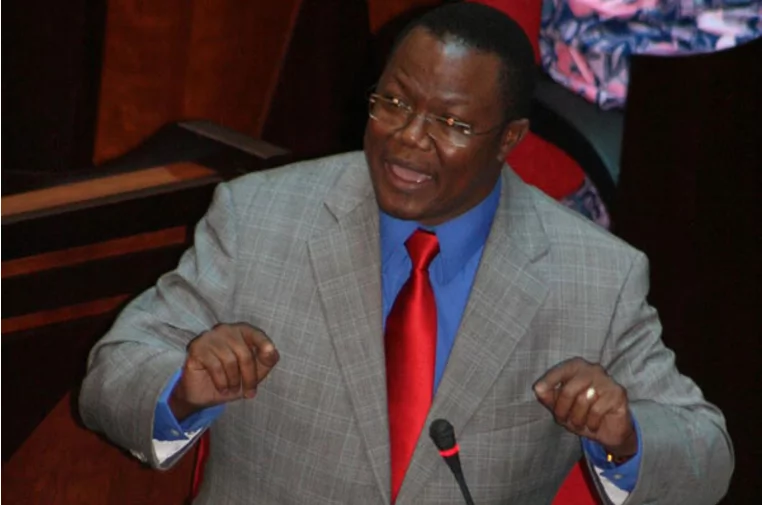
President John Magufuli
Dar es Salaam. The Law Society, the Bar Human Rights Committee (BHRC) and Bar Council of England and Wales (BHRC) have written a letter to President John Magufuli to urge him to immediately carry out an independent and effective investigation of the facts and circumstances of the shooting of Singida East Member of Parliament Tundu Lissu.
The lawmaker, who also doubles as the President of the Tanganyika Law Society (TLS), was on September 7 shot in the stomach and legs by unknown assailants at his Dodoma residency.
“The shooting of Mr Lissu, and other events that have taken place with regard to members of the legal profession and the TLS in particular, are of great concern. It is of the utmost importance that the independence of bar associations be respected, since this is an essential element to guarantee the effective functioning of the rule of law,” reads the letter in part.
The letter, which was signed on Wednesday by the Law Society President Joe Egan, the Bar Council chairman Andrew Langdon and BHRC chairman Kirsty Brimelow, added: “As with every citizen, members of the legal profession have the right to freely to express their opinion as well as entitled to exercise their professional duties without external interference.”
In this regard, the Law Society, the Bar Council and BHRC respectfully remind the President of the international legal obligations that are binding on Tanzania and that reflect these rights and principles.
The three bodies also urge the head of state to deploy an independent investigation over other crimes being committed against members of the legal profession.
They include bomb explosion at the offices of IMMMA Advocates less than a month ago, a threat by the then minister for Constitution and Legal Affairs, Dr Harrison Mwakyembe, to de-giregister the TLS, over the past seven months and a recent proposal by the government to amend legal practice legislation with the effect of divesting primary regulation of the legal profession from the Bar and Judiciary to the ministry responsible for Justice.
“We understand that one of the partners of the law firm has been vocal about the decline in the rule of law in Tanzania and has referred to the alleged interference by State authorities with the exercise of the legal profession,” the three bodies said in the letter.
“It is high time President Magufuli fulfilled Tanzania’s international obligations, protect lawyers and ensure that they are able to perform their professional activities without facing intimidation, hindrance, harassment or improper interference,” reads a part of the letter.
- Tanzanian opposition leader Tundu Lissu has been flown to Nairobi for specialised treatment
- Lissu had been shot by unknown assailants and is said to be in critical condition
- Lissu is a strong critic of President Magufuli and belongs to the CHADEMA party
Tanzania’s opposition leader, Tundu Lissu, has been airlifted to Nairobi for specialized treatment.
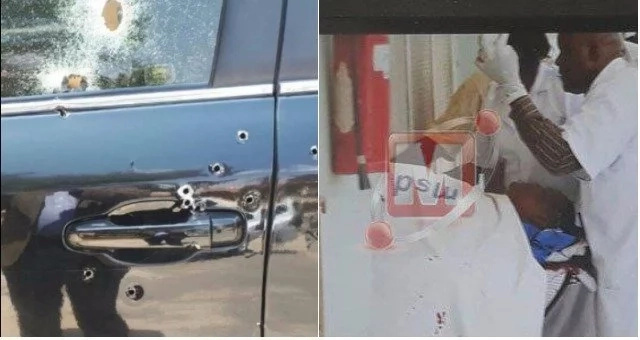
Lissu was shot several times by unknown assailants close to his home on Thursday, September 7, while he was on his way to Parliament in Dodoma.
The assailants are believed to have been in a white Nissan when they attacked the CHADEMA party leader.

Tanzania opposition leader Tundu Lissu. Photo: Nation.
“Lissu suffered multiple gunshot wounds. We strongly condemn this attack and are closely monitoring his condition,” said the CHADEMA spokesman, Tumaini Makene.
Following the attack, Magufuli took to social media to send Lisuu get well wishes as he called for investigations into the terrible attack.

Assailants sprayed Lissu's car with bullets. He was rushed to a hospital. He was later airlifted to Nairobi for specialised treatment. Photos: Facebook, Yassin Juma.

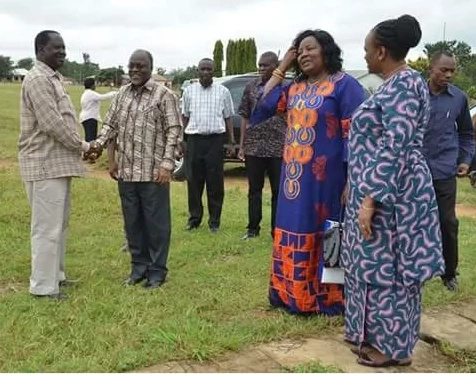
Tanzania President John Magufuli greeting opposition leader Raila Odinga during a past visit to Kenya. Photo: Nation.
Lissu is one of President John Magufuli’s most fierce critics, and because of this, he has been arrested on occasion and now has 12 cases in court filed against him.
PRESIDENT John Magufuli yesterday ordered security organs to immediately launch an intensive manhunt for all suspects behind the brutal shooting of Singida East MP Tundu Lissu (CHADEMA).
The Head of State said he received with shock the news about the heinous attack, stressing that the assailants must be hunted and brought to justice.
Mr Lissu who doubles as the Tanganyika Law Society (TLS) President was reportedly shot at around 1:30 pm yesterday near his residence in Dodoma region. As of yesterday evening, his condition remained stable, Dodoma Region Medical Officer Dr James Charles confirmed.
The outspoken MP who had earlier attended National Assembly sessions was shot and wounded by unknown gunmen just minutes after leaving the parliament grounds. He was immediately rushed to Dodoma General Hospital, but his driver was not wounded in the shooting, eyewitness told the ‘Daily News’.
Speaking to reporters, Dr Charles said his medical team was ‘compe tent’ enough to take good care of the opposition leader, apparently in response to requests that the legislator be referred for further consultancy elsewhere.
“A team of specialists was working to stabilize the situation … and I can now confirm he is stable and well,” he told reporters, shortly after attending to the patient. The regional medical chief however said the doctors were still examining the number and magnitude of the wounds.
“Initially, we had detected gunwounds in his stomach and leg,” he added. Chama cha Demokrasia na Maendeleo (Chadema) National Chairman Mr Freeman Mbowe had earlier told reporters the condition (health) of their fellow legislator was “serious.”
“We don’t know the motive behind the shooting … but for now all we can do is … pray for his quick recovery,” he said. Home Affairs Minister Mr Mwigulu Nchemba who also visited the hospital earlier in the afternoon declined comment but insisted the government would issue a statement after a clinical examination report.
MPs and Chadema followers in Dodoma flocked the hospital grounds following media reports detailing the Singida-East lawmaker and Opposition Chief Whip in the National Assembly who was hospitalised at the regional hospital.
Some opposition members of parliament who were at the hospital were heard saying, “… Lissu should be immediately transferred for further medical attention.” But Dr Thomas Kashililah, the National Assembly Clerk, told the ‘Daily News’ that parliament was at standby to foot the bill should the medical doctors recommend further treatment abroad.
The Speaker of the National Assembly, Mr Job Ndugai and his Deputy Dr Tulia Ackson and Minister for Health, Community Development, Gender Elders and Children Ummy Mwalimu also visited the hospital yesterday.
Dodoma Regional Security Committee Chairman Mr Jordan Rugimbana and Regional Police Commander Gilles Muroto said the police had launched a manhunt for the people behind the shooting.
“It is too early to speak about the suspected gunmen but the police are now working on to ensure all those behind the crime are brought to justice,” the commander said.
Meanwhile, the ruling Chama Cha Mapinduzi (CCM) has said it was shocked by the reports over the brutal shooting of Mr Lissu, urging the police to search for the assailants, investigate and take stern legal measures against all involved.
The party’s Secretary for Ideology and Publicity, Mr Humphrey Polepole, said the party was praying for Mr Lissu’s immediate recovery so he could continue with his responsibilities as lawmaker.
Dodoma. Two committees formed by the Speaker of the National Assembly Mr Job Ndugai to investigate tanzanite and diamond business are expected to present their reports on Wednesday, the Parliament said in a statement released on Monday.
The two teams which were given 30 days to complete their job have done so and Mr Ndugai will receive the reports in a brief function planned at the Parliament grounds before handing them to the Prime Minister Mr Kassim Majaliwa.
The event is part of the activities scheduled for the sessions which are starting on Tuesday.
"The brief event to receive the reports on tanzanite and diamond probe will also be attended by other national leaders and it will be broadcasted through Bunge TV channel," stated the statement issued by the public relations office.
Three bills will also be read in all three stages during the two-week sessions.
These include the Written Laws (Miscellaneous Amendment) No.3 Bill 2017; The Railways Bill 2017 and The Medical, Dental and Allied Health Professionals Bill 2016.
The Parliament is also expected to ratify five protocols and conventions during the sessions.
On Tuesday, seven newly appointed special-seats MPs from the opposition Civic United Front (CUF) will be sworn in to replace their colleagues who were kicked out of the party which is still going through crisis.
During the sessions, a total of 125 questions are expected to be answered while 16 others will be asked straight to the Prime Minister on Thursdays.
Ministry of Health, Community Development, Gender, Elderly and Children on Tuesday, September 5, dismissed reports on outbreak of Ebola or “Ebola like” diseases in the country.
There is no Ebola or ‘Ebola like’ symptoms that have been detected in the country and people must not panic as it is not true, a statement issued on September 5 by acting Head of Communication in the Health Ministry, Ms Catherine Sungura, said.
“We are happy to inform Tanzanians that there is no official report indicating outbreak of Ebola or any other contagious infections in the country,” she said.
This comes after reports on social media suggested two patients had tested positive for the virus at Temeke Hospital, in Dar es Salaam.
In addition, the reports also said that the deadly disease entered the country from neighbouring Rwanda.
However, Ms Sungura noted in the statement that the comprehensive measures have already been put in place by the government to contain Ebola outbreak including to strengthen screening of international travelers in airports, country borders and ports.
“Tanzania should continue with their normal activities. But the Government asks everyone to be vigilant and we encourage all our officers in all border areas to continue screening of international arrivals,” she said.
This is the second time that government is forced to allay fears on Ebola outbreak after it did so in April, 2017 after the World Health Organisation (WHO) declared an Ebola outbreak in the Democratic Republic of Congo (DRC).
PRESIDENT Uhuru Kenyatta yesterday went public after the verdict, saying he disagreed with the Supreme Court ruling but will respect it.
He urged Kenyans to maintain peace and shun tribalism. Kenya has all along been battling tribalism, a problem that has existed since independence. President Kenyatta in his speech was confident that Jubilee would still win.
Kenyatta urged those in Opposition to campaign peacefully as the two camps are not at war. He also thanked God for the far He had brought Kenyans. He asked Kenyans to be respecters of the law.
IEBC Chairman Wafula Chebukati issued a statement after the Supreme Court ruling that invalidated President Uhuru Kenyatta’s re-election, saying the Commission did justice to the election but, however, welcomed the court’s ruling.
Chebukati called upon the Director of Public Prosecutions (DPP) to investigate and prosecute any member of the Commission found culpable of election malpractices. He noted that IEBC would make internal changes to their staff ahead of a fresh presidential election.
The Chair also urged the Supreme Court to act fast and provide a detailed ruling within 21 days so that the Commission can correct the errors committed. He also made it clear that he will not resign from his position.
The Supreme Court issued the historic ruling as envoys serving in Kenya issued statements to congratulate Kenyans.
In their statements, the foreign envoys in Kenya termed the Supreme Court’s decision to nullify President Kenyatta’s victory as “an example for Africa and the world” They also congratulated the Kenyan people for “showing patience and confidence” in the legal system.
No presidential election in Kenya has ever been nullified before. “Kenya’s electoral institutions must now begin preparing for a new presidential poll later this year and we urge everyone to work to make it free, fair, credible and peaceful.
We have trust in the ability of Kenya and its citizens to do so,” the statement read. In the ruling issued yesterday, the court said the electoral board committed “irregularities and illegalities” during last month’s vote, harming the integrity of the election.
The court also ordered another presidential election to be held within 60 days. Envoys, who appended their signatures, include United States Ambassador to Kenya Robert Godec and Nic Hailey, the High Commissioner for the United Kingdom. Others are Bruno Pozzi (European Union), Jutta Frasch (Germany), Ralf Hecner (Switzerland) and Mette Knudsen (Denmark).
Amnesty International also termed the ruling that overturned the results of the August 8 presidential election as historic. It “sets an example for the rest of the world,” the human rights group added in a statement by Justus Nyang’aya, its director for Kenya.
“We urge all parties to comply with the judgment and call upon the police to observe restraint in their handling of any celebrations or protests that may follow this landmark ruling,” Mr Nyang’aya said.
Celebrations among Nasa supporters were seen after the Supreme Court nullified the re-election of President Kenyatta. There were huge celebrations in Kisumu following the delivery of the judgment in Nairobi by judges led by Chief Justice David Maraga.
There were also celebrations in Kisii Town as the news of the judgment were received with Nasa supporters singing in praises of their leaders. Reacting to the judgment, Kisii Governor James Ongwae said Nasa has finally been vindicated in its insistence that “the poll was doomed and could not be relied to give a proper outcome.”
Civic United Front (CUF) member, Ms Hindu Mwenda
Dar es Salaam. Civic United Front (CUF) member, Ms Hindu Mwenda, who was among eight members picked to fill posts of Special Seats Members of Parliament, has died.
CUF Deputy secretary general, Ms Magdalena Sakaya confirmed that Ms Hindu died
Friday evening at her home, Kibada in Kigamboni district. She will be burred tomorrow at the Kisutu Cemetery, Ilala municipal.
Ms Hindu dies only days before her swearing as MP when the Parliament opens for business on September 5 in Dodoma.
Ms Sakaya described the former MP elect as hard working and honest to the party and she was already ready to serve the party in any assignment.
She was among the members who actively participated in the building of the party since 1990’s.
“She was so popular in her home region of Tabora. I have no words to correct depict her character but she was a person with good heart and ready to serve the country at the best of her capability,” said Ms Sakaya, adding that Ms Hindu had stomach complications.
She was among the eight special seats MPs appointed by the National Electoral Commission (NEC) on the end of July to fill the vacancies left by the CUF MPs whose memberships were nullified by the party.
In response to North Korea’s recent intermediate range ballistic missile test that overflew Japan on August 28, Washington, Tokyo and Seoul have embarked on a show of force to deter Pyongyang.
As part of that show of force, the U.S. Marine Corps flew four of its stealthy new Lockheed Martin F-35B Joint Strike Fighters alongside a pair of U.S. Air Force Rockwell International B-1B Lancer strategic bombers. The American warplanes were joined at various points in their mission by four Republic of Korea Air Force (ROKAF) F-15K Slam Eagles strike fighters and a pair of Japan Air Self-Defense Force (JASDF—aka Koku Jieitai) F-15J Eagle air superiority fighters.
"North Korea's actions are a threat to our allies, partners and homeland, and their destabilizing actions will be met accordingly,” Gen. Terrence J. O’Shaughnessy, commander of U.S. Pacific Air Forces, said.
“This complex mission clearly demonstrates our solidarity with our allies and underscores the broadening cooperation to defend against this common regional threat. Our forward-deployed force will be the first to the fight, ready to deliver a lethal response at a moment’s notice if our nation calls."
According to U.S. Pacific Command, the four F-35Bs—which are based in Iwakuni, Japan—the two B-1B bombers and the two JASDF F-15Js flew together over the ocean near the Japanese city of Kyushu. Subsequently, the American planes and the four South Korean F-15K strike fighters “practiced attack capabilities” by releasing live weapons at the Pilsung Range training area in Korea before returning to base.
The short takeoff/vertical landing F-35B stealth fighter is a new element to these increasingly frequent shows of allied force. The newly operational fifth-generation fighters—together with other American stealth aircraft such as the Lockheed Martin F-22 Raptor and Northrop Grumman B-2 Spirit strategic bomber—would be amongst the first aircraft to cross into North Korea to strike at air defenses and command and control nodes if war broke out on the Korean peninsula.
"The F-35 embodies our commitment to our allies and contributes to the overall security and stability of the Indo-Asia Pacific region," Lt. Gen. David H. Berger, commander of U.S. Marine Corps Forces Pacific, said.
"By forward-basing the F-35, the most advanced aircraft in the world, here in the Pacific, we are enabling the Marine Corps to respond quickly during a crisis in support of Japan, the Republic of Korea, and all our regional partners."
Tensions are high on the Korean peninsula as North Korea continues to test ballistic missiles and fiery rhetoric emanates from both Pyongyang and Washington. Indeed, the Pentagon’s show of force comes less than aday after U.S. president Donald Trump decreed that “talking is not the answer!”
One can only hope that cooler heads will eventually prevail.
Image: Reuters.
A GRAPE processing plant that is capable of supplying bulk wine to other factories across the country is set to be constructed at Chinangali Two village in Buigiri Ward, Chamwino District.
Chamwino District Executive Director Athumani Masasi told The ‘Daily News’ here yesterday that the project was designed to start early in October, and would cost 20bn/-, and construction works are slated for completion early next year.
“Grape growers will soon benefit from reliable market of grape, thanks to the first grape processing industry in the country which will also create over 1,000 employments,” the DED says.
Mr Masasi said the factory would help uplift incomes of fledging grape growers in Chamwino in particular and Dodoma in general, adding that the factory would also help increase revenue collection within the District.
Dodoma is the country’s main grape growing region in Tanzania, second largest producer of the cash crop after South Africa within sub-Saharan Africa.
Mr Masasi pointed out Chamwino District Council has teamed up with GEPF, Workers Compensation Fund and Tanzania Investment Bank to carry out the project after signing Memorandum of Understanding (MoU) with the public institutions last March.
“Consultants from Archquant Services Limited are currently reviewing a business plan,” he said, adding “The project will be executed in three phrases which will include installation of a processing plants in last phase,”

PRESIDENT John Magufuli’s mode of administration is still sending shock waves throughout the country, Reporter at Large can reveal. With a cry of Hapa Kazi tu, his modus operandi of galvanising people into action has set him apart as new and different leader taking the people into the industrial era.
To do that, he has created diligence to begin with. Immediately after his election President Magufuli adored as Jembe - hoe, proved to have a unique administration. He took nearly a month to form a cabinet, governing the country with only the Prime Minister Kassim Majaliwa and principal secretaries.
Of course the President wanted the right people to work with. Pragmatism of that team under his leadership is reverberating all over the country today. Last Thursday Reporter at Large came upon an Asian businessman, who was experiencing the taste of Dr Magufuli’s brand of administration.
The man, some balding octogenarian, started telling his story by banning me from men tioning his name. “I don’t want to get into trouble,” he said. “There can be no trouble if your thought is constructive,” I told him.
I tried to coax him to allow me to use his name in my story. I hate writing stories without the name of my source. Moreover, the name lends credibility to my story. “If that is so, then don’t write the story,” he spat firmly.
But I knew what he wanted to say was interesting and it was irresistible to me to miss the information. He, however, would not change his mind. Under no circumstance was I to mention his name. He won.
Dr Magufuli’s government impressed him! As a businessman, he hated a situation of multiplicity of taxes. “Dr Magufuli’s government is comparable only to that of India Prime Minister Narendra Modi,” he said.
I could hardly imagine similarities between the India’s Prime Minister and our President. The businessman, however, looked at the two through a prism of tax. The businessman would ramble in his talk only to settle at last on tax.
He loved Dr Magufuli’s exemption of taxes to the common man. The businessman reminded me of taxes on crops the President recently abolished. He waived taxes on amounts of crops like maize, rice or cassava less than a tone.
According to the President, the taxes were a bother to the farmer. The step was hailed in the country as a great act by the President. Having so many varied forms of taxes complicated their payment and made them a hassle.
But, according my nameless Asian, President Magufuli has made it even simpler for the people to pay tax than Modi has for his Indian citizens. “Modi has lumped together all taxes into one form of a tax, simplifying payment.
But President Magufuli has made life even more enjoyable by abolishing some taxes. Some taxes were slapped on the people even without the permission of the government, it so apparently seemed.
That meant the taxes never reached the coffers of the state and maybe it was reason their collection was so ruthless because the thieves wanted to line their pockets with the cash. What the Asian said reminded me of the colonial days. People seemed to smell tax collector from a distance. They had no uniforms, but people would detect them wherever they were.
Adult males darted from their huts like weaver birds from their nests and headed for the hills, scampering like monkeys with their spoils from plantations on plains. On one occasion I saw a man who had failed to make it to the hills disappear into a corn granary monkey style.
The man had been gobbling food in the house when a woman whispered to him from behind the house about the danger outside. “They will see you if you run out through the gate,” she said.
The man ran out of the hut, darted to a granary half-full with maize, squeezed himself through the structure’s opening and dropped inside it like a lizard. “You see, some governments think the best means to collect taxes is to swamp the people with a myriad of taxes,” said the businessman.
Dr Magufuli’s fifth government has differed from such authorities and devised ways to allow the simple citizen respite. If there were any fear from Dr Magufuli’s government, it came from some of his functionaries, the Asian revealed.
I would not let that ride without details. “Please explain,” I demanded. Some officers of the Im migration office prowled the streets at odd hours of the night, he said. These officers had an uncanny ability to detect foreigners for financial harassment.
Sometimes they missed their prey and stopped even Asian citizens. “But their goal is the same,” he said. “They will ask to see your passport and ask if you have a permit for this and for that. Then they want money.”
Unknown to the man, it is the work of an immigration of ficer to know who is a foreigner and what they are doing in the country. When I told him that he answered and said: “Why do police also harass us about such things then?” he asked.
Both the police and the immigration office belong to the Ministry of Home Affairs part of whose work it is to know the status of a foreigner. The police, however, should notify the immigration when they learn of a foreigner improperly in the country and let immigration proceed with their work.
It is not wrong therefore that one of them has demanded to know of a foreigner’s status. Basically, it is a matter of national security. “They don’t do this in India,” he said. “Foreigners go around the country and visit places they are allowed to visit without such fuss.
But in Tanzania what is happening will discourage foreigners from visiting Tanzania.” I thought he had a point. Attending foreigners is a sensitive matter. Observation of the law notwithstanding, there ought to be respect and freedom for visitors.
source : dailynews.
President of Japan International Cooperation Agency (JICA) Dr Shinichi Kitaoka
Dar es Salaam. Nine teachers from Japan were in the country for nine day to share experience with their counterparts and students in Tanzania, through Japan International Cooperation (JICA).
The teachers were in the country from August 14.
During their tour in Dar es Salaam and Mtwara Regions, they had an opportunity to visit two Primary Schools (Msimbati and Raha Leo), National Muhimbili Hospital (MNH), Azania High School and Libobe ward in Mtwara Municipality.
At Libobe ward, the teachers had the opportunity to visit different families and development projects implemented by JICA including a water project which was funded by the Japanese firm approximately 10 years ago and currently managed by villagers.
Furthermore, the teachers had the opportunity to learn much about the daily lives of Tanzanians and the various challenges they face.
The Japanese teachers also had opportunity to visit the Marine Park National Reserve located in Msimbati, Mtwara Region.
When bidding farewell before leaving, they promised to teach Japanese students about beauty of Tanzania and its many attractions.
Zimbabwean first lady Grace Mugabe
Johannesburg, South Africa . South African police were on Tuesday investigating an alleged assault by Zimbabwean first lady Grace Mugabe on a model who was staying at a Johannesburg hotel with her two sons.
During the incident, which occurred on Sunday, Mugabe, 52, allegedly attacked Gabriella Engels, 20, with an extension cord, leaving her with wounds on her forehead and the back of her head.
"We are dealing with the matter and will get the full report," Police Minister Fikile Mbalula told the local Eyewitness News agency.
"If she came here with her diplomatic passport, she'll have diplomatic immunity. This doesn't mean she cannot be arrested."
Pictures on social media appear to show Engels with a bleeding head injury after the alleged incident in Capital 20 West Hotel in the upmarket district of Sandton.
Mugabe allegedly arrived with bodyguards and accused Engels of living with her sons Robert and Chatunga, both in their 20s, who are based in the city.
"We were chilling in a hotel room, and (the sons) were in the room next door. She came in and started hitting us," Engels was quoted as saying by the TimesLIVE website.
"The front of my forehead is busted open. I'm a model and I make my money based on my looks."
Mugabe, who is 41 years younger than her husband Robert, has two sons and one daughter with the Zimbabwean president.
"There was a criminal case opened in Sandton at Morningside (station) yesterday, but I can not release any name. Right now we have not arrested anybody," national police spokesman Vish Naidoo told AFP.
Foreign affairs spokesman Clayson Monyela said Mugabe's trip was "a private visit so government cannot get involved if an alleged crime is committed."
Sizakele Nkosi-Malobane, a provincial minister in Gauteng province, told Jacaranda FM that the case should be pursued through the courts.
"We hope that it will send a strong message to all leaders who abuse their power and assault innocent people in our country," she said.
Grace Mugabe regularly speaks at rallies in Zimbabwe and is seen as one potential successor to take over from her increasingly frail husband.
The Zimbabwe government made no immediate comment.
A NEW species of giant dinosaur which roamed southern Africa 70 million years ago has been unearthed in Tanzania.
The five-ton long-necked herbivore lived in the Cretaceous period when Madagascar and Antarctica split off from southern Africa followed by the gradual ‘unzipping’ of South America.
Similar skeletons have been found worldwid but are best known from South America. Fossils in this group are rare in Africa. The new dinosaur is called Shingopana songwensis’ derived from the Swahili term ‘shingopana’ (wide neck) and the location of the fossils in the Songwe region of the Great Rift Valley in south-western Tanzania.
It was about 8m long. “There are anatomical features present only in Shingopana and in several South American titanosaurs” said Eric Gorscaké a US palaeontologist who reported the find in the Journal of Vertebrate Paleontology.
“Shingopana had siblings in South America whereas other African titanosaurs were only distant cousins.” Judy Skogé of the US National Science Foundation said: “This discovery suggests that the fauna of northern and southern Africa were very different in the Cretaceous period.
At that time southern Africa dinosaurs were more closely related to those in South America and were more widespread than we knew.” Paper co-author Eric Roberts of James Cook University in Australiaé said the Shingopana bones were damaged by the borings of ancient insects shortly after death.
“The presence of bone-borings provides a CSI-like opportunity to study the skeleton and reconstruct the timing of death and burial and offers rare evidence of ancient insects and complex food webs during the age of the dinosaurs” he said.
SEVERAL lawyers are opposed to a recent call by the Tanganyika Law Society governing council to boycott court sessions for two consecutive days starting today to protest the ‘bombing’ of IMMMA Advocates Offices in Dar es Salaam.
The call was relayed to TLS members by its president, Tundu Lissu, just moments after an emergency meeting convened by the council specifically to chart its next course of action following the alleged bombing of the law firm’s offices at Upanga area in Kinondoni District on the night of August 25, 2017.
Most of advocates interviewed by the Daily News yesterday pointed out those calls were unprofessional, unnecessary and unreasonable, arguing that such action would have negative impacts or consequences to their clients, who have fully instructed them to provide legal services.
“I was very much saddened to hear such calls … we need to think twice as professionals,” Advocate Alphonse Katemi remarked, adding that, “the Governing Council has hurriedly come up with this position which, in my opinion, is not proper.”
The advocate gave six reasons to support his dissenting views against the proposed strike, saying the TLS wasn’t a ‘trade union’ and that, as officers in the legal profession, they do not have any dispute with either the government or judiciary.
“The consequences that will result after the strike will be personal. We go to court not as tourists … we’ve been fully paid by our clients and we have full instructions to represent them in court. Who do you think would suffer at the end of the day? What are we intending to achieve, he queried?”
Mr Katemi further argued that the council had no mandate or jurisdiction to give such a position and that only the TLS general assembly - upon consultation of all members from different parts across the country - had the mandate to give such a position.
Seasoned advocate Majura Magafu also pointed out that what has been decided by the TLS Council was not proper and unacceptable, arguing that there was ‘no evidence whatsoever’ linking the alleged bombing with state agencies or any other people with government connection.
“Investigations into this matter are still going on and no any report has so far been given. It is not proper at the moment to connect the incidence with the government.
I think we need to give the police time to investigate on the matter rather than jumping into conclusion,” he said. Mr Magafu further argued that the attack was like any other incidence that could happen to anybody or office and nobody knows what really happened.
“It could be a personal disagreement between officers of the law firm and some people or some thugs wanted to steal or anything,” he said. Another advocate Oscar Msechu gave similar sentiments, but was quick to point out that much as they condemn the attack, law professionals must act reasonably and carefully to deal with the matter, rather than directly throwing blames to the government.
“This issue is very tricky. We should be minded that we have fiduciary relationship with our clients who have fully instructed us to represent them. What will happen if a case is dismissed for non-appearance of an advocate who is fully paid? I think our clients stand to suffer more,” he said.
Advocate Hassan Kiangiso also opposed the move by the TLS Council, saying he would attend his client well because any default that may cause dismissal of the case amount to professional negligence.
He insisted that provision of legal services to clients was of paramount importance.